
Door-only and installed ranges.
The biggest moving part of the facade
Residential garage doors: style, material and insulation
On many American houses the garage door takes up a third of the front wall seen from the street. Residential garage doors are chosen for how they work, but they are judged, by neighbors and by buyers, for how they look. This page covers both: the panel styles, the materials, and what insulation really does.
(888) 217-1757The call reaches an independent garage door company in your area to book a visit.
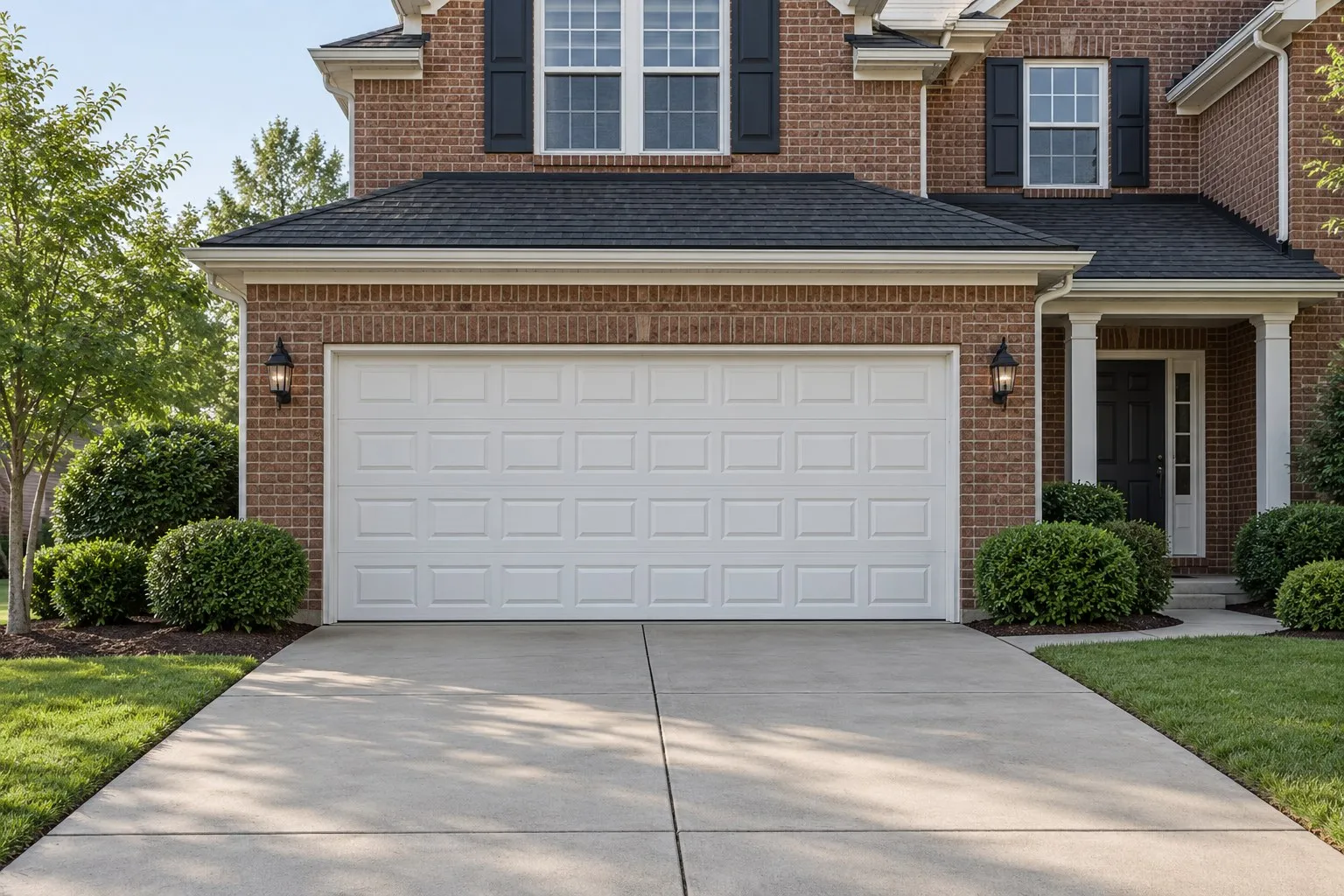
Most residential garage doors in the United States are sectional: four or five horizontal sections hinged together, rolling up on tracks and parking under the ceiling. Style and material are chosen inside that system. The frame, springs and opener stay the same whether the face is plain steel or cedar.
Sectional garage doors and their panel styles
The same sectional door is pressed or built into very different faces. The drawings below are one 16 by 7 foot door, four sections high, at the same scale.
Short raised panels suit colonial and traditional houses; long panels read lower and wider and suit ranches. Carriage-house faces imitate the swing-out doors of old coach houses, with overlay boards, a false center split and decorative strap hinges, though the door still rolls up in sections. Flush and full-view doors belong to modern and mid-century houses.
Materials, from steel to wood garage doors
Steel
The default, because it covers the widest price range. Single-layer steel is light and cheap; two- and three-layer doors add insulation and a steel inner skin. Skin thickness is given as gauge, and a lower gauge number means thicker steel. Factory paint colors and wood-grain embossing are standard; a composite overlay can give steel the look of stained boards.
Wood garage doors
Built from cedar, redwood, hemlock or similar species, often to order. Nothing else looks like real wood at close range, and nothing else needs as much care: the finish has to be renewed on a schedule, especially on doors that face afternoon sun or driving rain. Wood doors are heavier, and the springs are sized to match.
Composite, fiberglass and vinyl
Composite overlays and fiberglass skins imitate wood without the rot, and vinyl doors resist dents and salt air. They trade some of wood’s depth for a much lighter maintenance schedule.
Modern garage doors: aluminum and glass
Full-view doors use an aluminum frame with glass or polycarbonate lites in every section. They let daylight into the garage and give a flat, gridded face that suits modern houses. Aluminum does not rust, which makes it popular near the coast, but it dents more easily than steel. Frosted or tinted glass keeps the view out while letting the light in.
Insulated garage doors and what R-value means
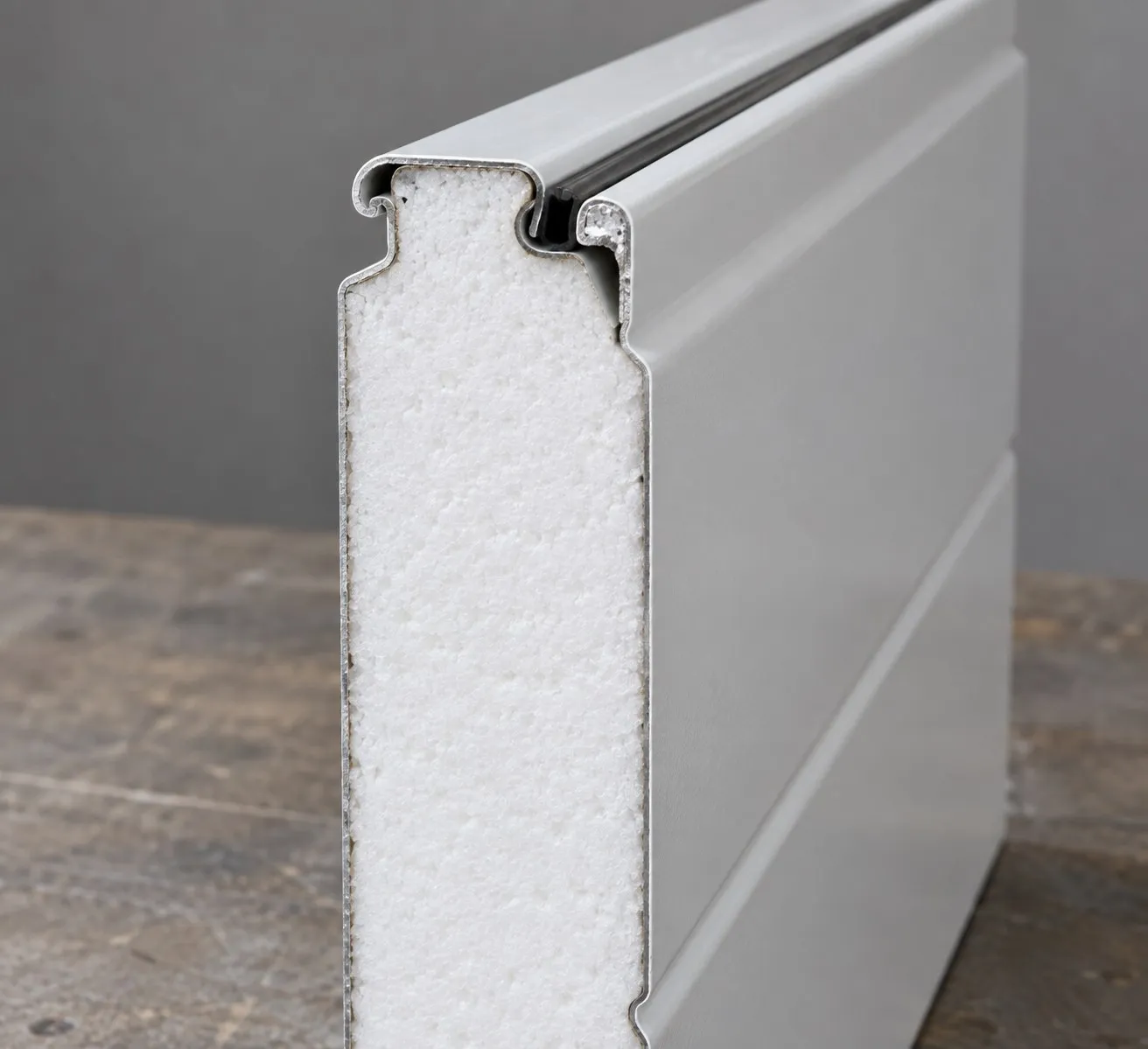
An insulated door is a sandwich. Polystyrene boards are fitted between the skins in some doors; in others polyurethane foam is injected and bonds to both skins, which also stiffens the door. Either way, the door gets quieter and more dent-resistant along with warmer.
The R-value on a brochure is usually calculated by the method in DASMA Technical Data Sheet 163, which measures through the middle of one section and ignores the joints between sections and the edges of the door, where heat actually leaks. A tested U-factor, measured on a whole door under ANSI/DASMA 105, is the better number to compare where it is published. Insulation pays most when the garage is attached, heated, used as a workshop or sits under a bedroom.
The door as the face of the house
Zonda’s Cost vs. Value report for 2025 put garage door replacement first for cost recouped at resale, estimating $12,507 of added value against an average cost of $4,672. Color is the least expensive lever on that: a door painted to match the trim disappears into the facade, a door in a darker contrasting color becomes the feature. Windows in the top section change the look from the street more than any panel style. The practical side of the switch is covered on the garage door replacement page, and prices by material on the new garage door cost page.
Residential garage doors: questions
What does steel gauge mean on a garage door?
It is the thickness of the steel skin, and the scale runs backward: a lower gauge number is thicker steel. A thicker skin dents less when a ball or a bike hits it.
Are wood garage doors worth the upkeep?
On a house where the door is part of the architecture, often yes. Wood needs its finish renewed regularly, especially on the side facing the weather. Composite overlays on steel give a similar look with less upkeep, at some cost in authenticity up close.
Do modern garage doors with glass lose heat?
More than an insulated solid door, yes. Insulated glass and polycarbonate panels narrow the gap. If the garage is heated or sits under a bedroom, ask for the tested U-factor of the whole door rather than the R-value of one section.
From choosing to installing
Headroom, track and spring sizing.
Springs, tracks and the day itself.
Checks before the truck arrives.
Sources checked for this page. Page last reviewed September 25, 2026.