
A failed balance test is the early warning.
Door still works · getting louder or slower
Garage door service for a door that still works
Garage door service is the visit you book before something breaks. The door opens and closes, but it has started to groan, shudder or hesitate, or it simply has not been looked at in years. The point of the visit is to find the part that is wearing out and to prove the safety features still work.
(888) 217-1757The call reaches an independent garage door company in your area to book a visit.
A garage door is the largest moving object in most homes, and it runs a few thousand cycles a year with almost no attention. Springs lose tension slowly, rollers wear flat, cables rust at the bottom, and the opener quietly compensates until it cannot. Service catches that drift early, when the fix is an adjustment rather than a part.
What garage door maintenance covers on a visit
- Balance test. The opener is disconnected and the door is lifted by hand to about waist height. A balanced door stays close to where it is left; one that drops or climbs is telling the technician about the springs.
- Springs, cables and drums. Springs are checked for gaps, rust and uneven stretch, cables for fraying just above the bottom brackets, drums for chewed grooves.
- Rollers, hinges and track. Worn wheels, cracked hinges and loose track brackets are the usual finds, and the reason a door runs rough before it runs off track.
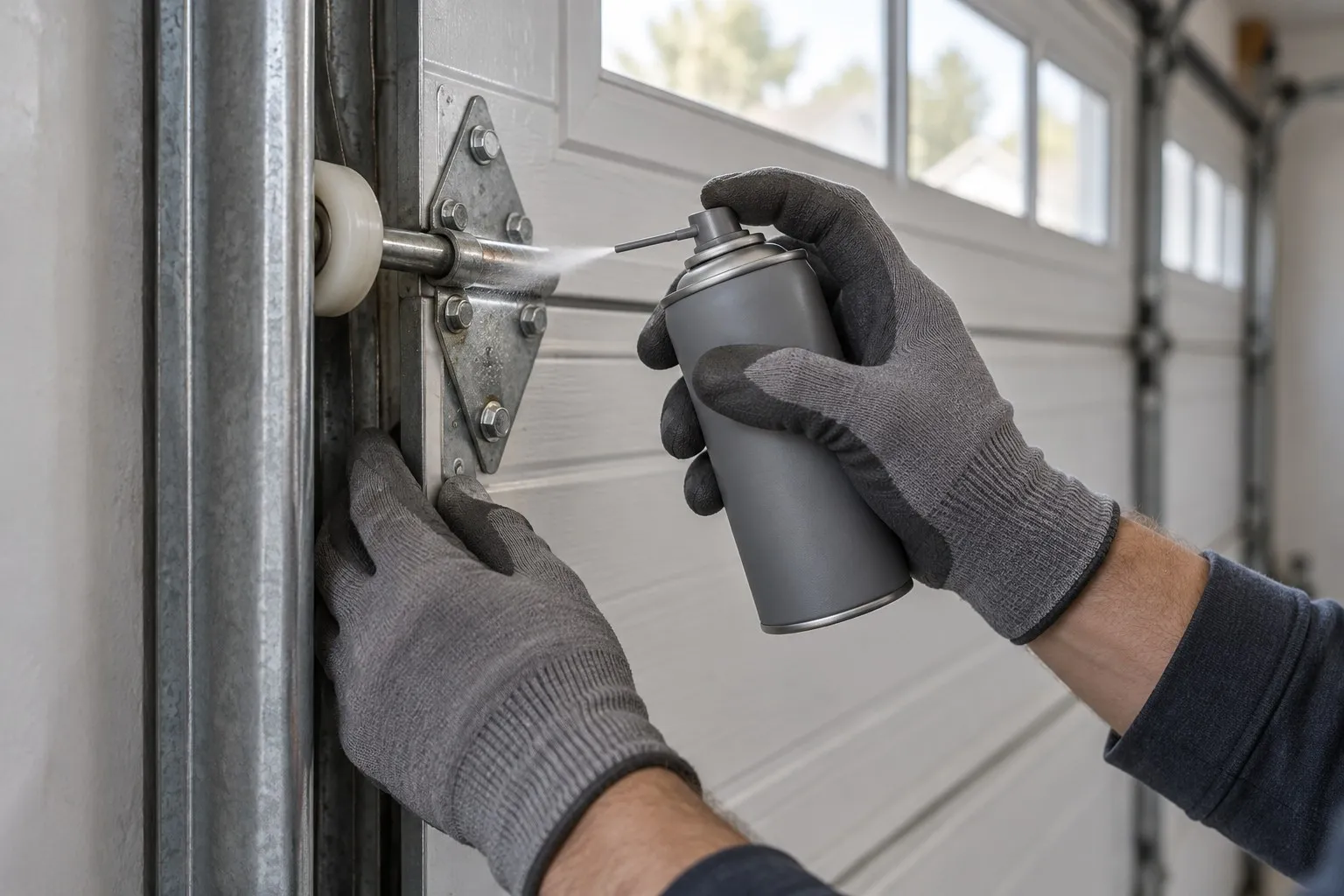
- Lubrication. Hinges, bearings and springs are lubricated to the maker’s instructions. DASMA’s technical sheet on spring life names missed counterbalance maintenance as one of the things that shortens it.
- Opener checks. Force and travel limits, the reverse-on-contact test, and sensor alignment with steady indicator lights.
- Weather seal and fasteners. A cracked bottom seal lets water sit against the cables; loose lag screws let the track lean away.
A good visit ends with a short written list: what was adjusted, what was lubricated, and what is worn but not yet failing, with a rough idea of how long it has. That list is more useful than any sticker on the wall.
Garage door services you can do between visits
Some checks take a minute and need no tools. Watch the door through a full cycle once a month and listen for scraping, popping or a change in rhythm. Look at the cables near the floor. Place a flat object where the door lands and close the door on it from the remote; it has to reverse. Pass a broom handle through the sensor beam while the door is closing; it has to reverse again. The federal standard for openers, 16 CFR Part 1211, is built around those two behaviors, and a door that fails either one should not be used until it is fixed.
Keep to the parts that are not under spring load. Tightening the bottom bracket bolts, adjusting the springs or loosening anything on the shaft belongs to the technician, however easy it looks.
When a service visit turns into repair
Sometimes the inspection finds a spring with visible rust pitting, a cable half frayed, or a roller cracked through. Those are replaced on the spot or booked as a repair, and the price should be written before the work starts. If the door has failed outright, a broken spring, a cable off the drum, a door jammed crooked, skip the service visit and go straight to the garage door repair near me guide, which sorts those failures by symptom.
Service is also the right time to ask about the door itself. A door with rusted bottom sections, no insulation in a garage you now heat, or an opener older than the 1993 safety rule is worth pricing against a garage door replacement before paying for another round of adjustments.
Garage door service: questions
How often does a garage door need service?
Once a year is the usual interval for a door that is used daily, and door makers’ own maintenance instructions set the details. A door that runs many times a day, sits near salt air or lives in a damp garage benefits from a shorter one.
What is the difference between garage door service and repair?
Repair is for a door that has failed: a broken spring, a cable off its drum, a door off track. Service is for a door that still works, to find the worn part before it fails and to keep the safety features doing their job.
Should the rollers be greased?
It depends on the roller. Sealed-bearing rollers need little or nothing, and grease on the track itself collects grit. Hinges, bearings and the springs get lubricated to the door maker’s instructions. A technician will know which parts on your door want what.
What service visits usually find
Flat wheels and cracked hinges.
Steady lights and a working reverse.
What to ask before booking a tune-up.
Sources checked for this page. Page last reviewed September 25, 2026.